Why Does Dough Stick to My Banneton? 7 Fixes
Dough stuck to your banneton? The seven most common causes, from the wrong flour to over-proving, and how to get your sourdough to release cleanly every time.
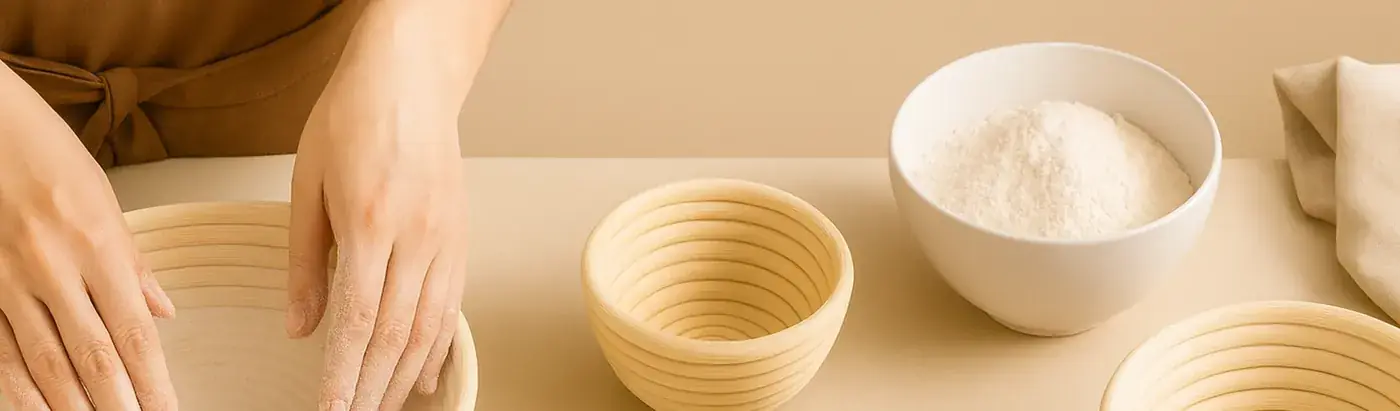
Few things are more frustrating than a beautifully proved loaf that tears as you turn it out. The good news: sticking almost always comes down to one of a few fixable causes.
The 7 most common causes
- Using wheat flour only. Wheat flour absorbs moisture from the dough and turns into paste. Switch to rice flour, or a 50/50 mix of rice and plain flour.
- Not enough flour. Especially on a new basket, be generous. Work it into every groove, then tap out the excess.
- A new, unseasoned basket. New rattan grips. Season it before the first bake.
- A damp basket. If the basket wasn't fully dry from the last bake, flour turns to glue. Always dry it completely.
- Very wet dough. High-hydration doughs are more likely to stick. Use the cloth liner until you're confident.
- Over-proving. Over-proved dough is weak and sticky and spreads into the coils. Shorten the prove or use a cold proof.
- Loose shaping. A slack surface has more contact with the basket. Build good surface tension when shaping.
Rescuing a stuck loaf
- Turn the basket over onto parchment and let gravity work for 20 to 30 seconds before lifting.
- Use a dry pastry brush or a dusting of rice flour to gently ease the edges away.
- If a patch tears, bake it anyway. It'll still taste great, and the tear often looks rustic.
A no-stick routine that works
- Basket completely dry.
- Generous dusting of rice flour, tapped out.
- Tight shaping with a dusting of flour on the dough's surface.
- Cold proof in the fridge, which firms the dough and makes it release more easily.
- Brush out and dry the basket straight after use.
Frequently asked questions
What is the best flour to stop dough sticking to a banneton?
Rice flour. It doesn't absorb moisture or form gluten, so it stays dry and powdery between the dough and the basket.
Should I wet my banneton before flouring?
Only a very light mist on a brand-new basket, so the first layer of flour clings. Never soak it, and let it dry before use.
More guides
- How to Use a Banneton: Step-by-Step for Sourdough
- How to Season a New Banneton (and Stop Dough Sticking)
- How to Clean a Banneton and Keep It Mould-Free
- Round vs Oval Banneton: Which Should You Buy?
- Banneton Size Guide: How Much Dough for Your Basket?
- Cold Proofing Sourdough Overnight in a Banneton
- What Is a Banneton? (Proving Basket Explained)
- How to Choose a Banneton: UK Buyer's Guide
- Simple Sourdough Recipe for a 25 cm Banneton
- Banneton Liner or No Liner? When to Use the Cloth
- How to Get the Spiral Pattern on Sourdough
- Banneton Alternatives: What to Use If You Don't Have One