How to Get the Spiral Pattern on Sourdough
How to get those bakery-style flour rings on your sourdough: using an unlined banneton, the right flour, shaping tension and turning out without smudging.
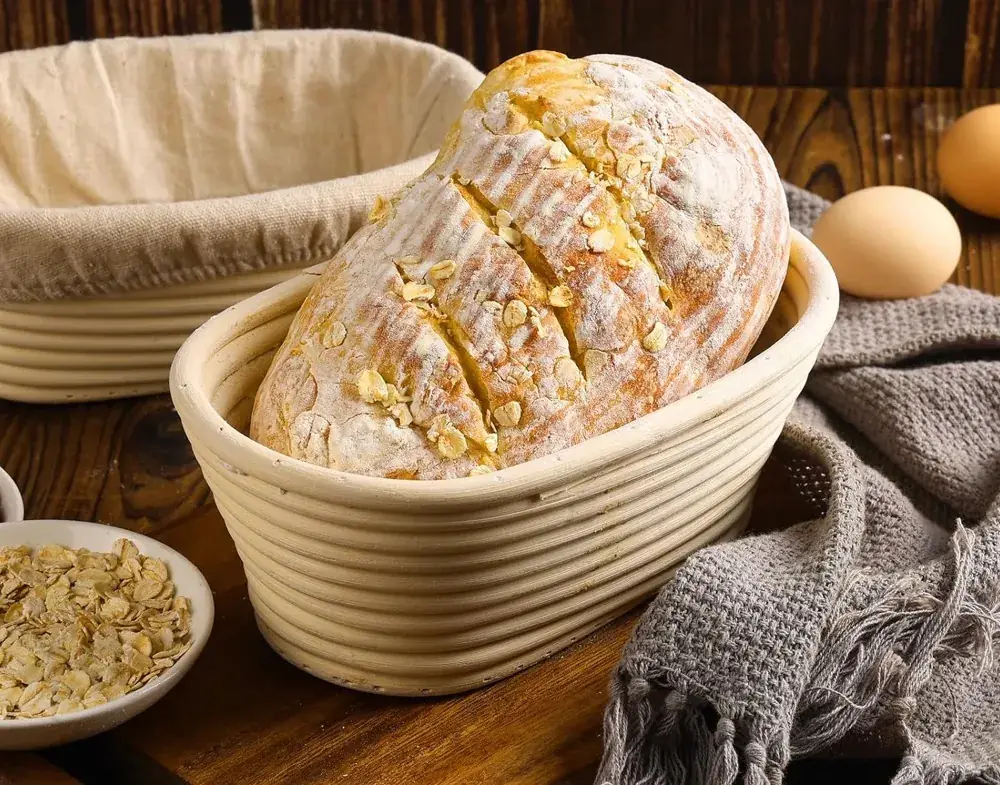
The spiral rings on bakery sourdough come from flour trapped in the coils of a rattan banneton. Get a few details right and you'll see them on every loaf.
What creates the pattern
When you dust an unlined banneton, flour settles in the grooves between the coils. The dough presses into the coils as it rises, picks up the flour on the ridges, and keeps those lines when it bakes. The darker crust between the white rings gives the contrast.
Step by step
- Remove the liner. The pattern only appears when the dough touches the rattan directly.
- Season the basket so the dough releases without dragging the pattern. See seasoning a banneton.
- Dust with rice flour, tap the basket firmly, and leave flour sitting in the grooves.
- Shape tightly. A taut surface presses evenly into every coil.
- Cold proof. Firm, cold dough holds the impression better and turns out cleanly.
- Turn out gently onto parchment and don't brush the flour off.
- Score away from the rings, or with one confident cut, so the pattern stays visible.
Why your rings aren't showing
- You used the liner.
- Too little flour, so the ridges had nothing to transfer.
- Over-proved dough, which spreads and blurs the lines.
- You brushed the loaf after turning it out.
- A heavy steam bake washed some flour off. A lid-on Dutch oven bake usually keeps the rings sharp.
Frequently asked questions
Do I need a liner to get the spiral pattern?
No, the opposite. Remove the liner so the dough touches the rattan coils directly.
Which flour gives the clearest spiral?
Rice flour gives clean, bright rings and also stops sticking, which keeps the pattern from smudging.
More guides
- How to Use a Banneton: Step-by-Step for Sourdough
- How to Season a New Banneton (and Stop Dough Sticking)
- How to Clean a Banneton and Keep It Mould-Free
- Round vs Oval Banneton: Which Should You Buy?
- Banneton Size Guide: How Much Dough for Your Basket?
- Cold Proofing Sourdough Overnight in a Banneton
- What Is a Banneton? (Proving Basket Explained)
- How to Choose a Banneton: UK Buyer's Guide
- Simple Sourdough Recipe for a 25 cm Banneton
- Why Does Dough Stick to My Banneton? 7 Fixes
- Banneton Liner or No Liner? When to Use the Cloth
- Banneton Alternatives: What to Use If You Don't Have One