Banneton Liner or No Liner? When to Use the Cloth
Should you use the cloth liner in your banneton? When a liner helps, when to leave it out for the spiral pattern, and how to flour and wash banneton liners.
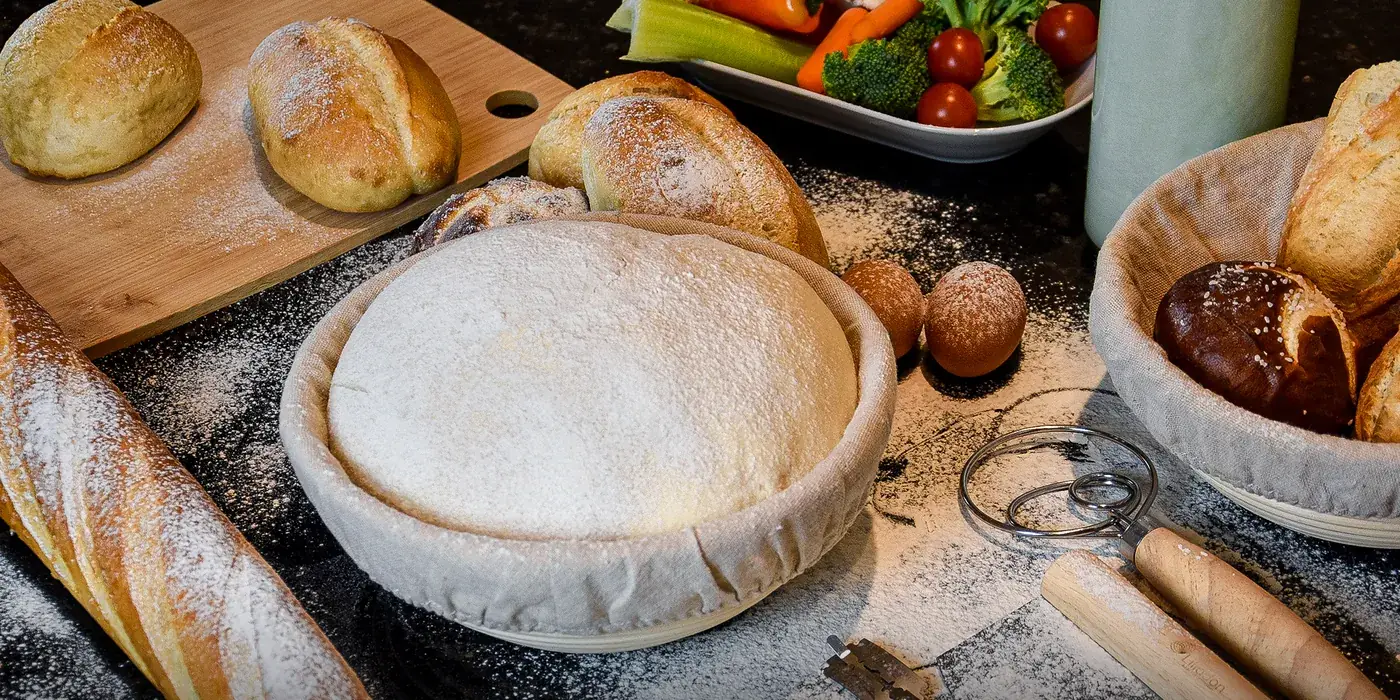
Most bannetons, including Bannette sets, come with a removable cloth liner. Neither option is wrong. It depends on your dough and the finish you want.
Use the liner when…
- Your dough is very wet (high hydration) or enriched.
- The basket is new and not yet seasoned.
- You want a smooth, blank crust for decorative scoring.
- You'd rather throw a cloth in the wash than brush out the basket.
Leave the liner out when…
- You want the classic spiral rings on the crust.
- Your basket is well seasoned and your dough is manageable.
- You want maximum airflow to the dough's surface for a slightly crisper skin.
| With liner | Without liner | |
|---|---|---|
| Crust look | Smooth | Spiral flour rings |
| Sticking risk | Lower | Higher on new baskets |
| Cleaning | Wash the liner | Brush out the basket |
| Best for | Wet doughs, beginners | Seasoned baskets, show loaves |
How to flour a liner
A liner isn't non-stick on its own. Rub rice flour firmly into the fabric so it fills the weave, then shake off the excess. A floured liner releases far better than a bare one.
Washing banneton liners
Shake off loose flour outdoors first, then machine wash and dry completely before putting the liner back on the basket. Washing it separately from clothes keeps flour off your laundry.
Frequently asked questions
Do I need to flour a banneton liner?
Yes. Rub rice flour into the cloth before each use. The liner reduces sticking, but it won't stop it on its own.
Can you put a banneton liner in the washing machine?
Yes, Bannette cloth liners are machine washable. Shake off the flour first and dry them completely before reuse.
More guides
- How to Use a Banneton: Step-by-Step for Sourdough
- How to Season a New Banneton (and Stop Dough Sticking)
- How to Clean a Banneton and Keep It Mould-Free
- Round vs Oval Banneton: Which Should You Buy?
- Banneton Size Guide: How Much Dough for Your Basket?
- Cold Proofing Sourdough Overnight in a Banneton
- What Is a Banneton? (Proving Basket Explained)
- How to Choose a Banneton: UK Buyer's Guide
- Simple Sourdough Recipe for a 25 cm Banneton
- Why Does Dough Stick to My Banneton? 7 Fixes
- How to Get the Spiral Pattern on Sourdough
- Banneton Alternatives: What to Use If You Don't Have One