What Is a Banneton? (Proving Basket Explained)
What is a banneton, what does a proving basket actually do, and do you need one for sourdough? A plain-English guide to bannetons, brotforms and liners.
A banneton in one sentence
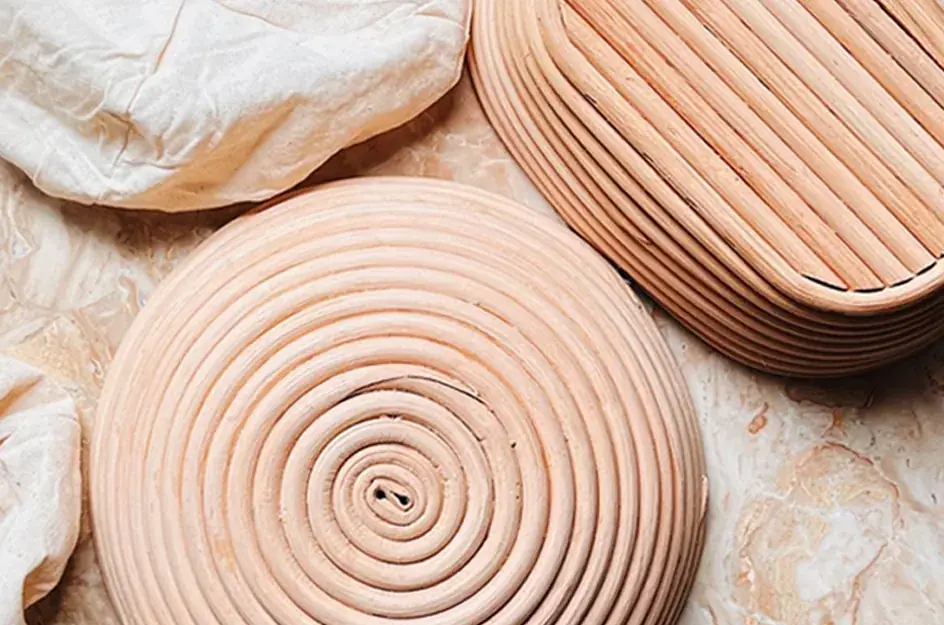
A banneton is a basket that holds shaped bread dough during its final rise, so the loaf keeps its height and shape instead of spreading flat before it goes in the oven.
Most are made from coiled rattan or cane, which is what leaves the familiar rings of flour on the crust of bakery sourdough.
What a banneton actually does
- Supports the dough. Soft, wet doughs like sourdough want to spread. The basket walls push the rise upwards, giving you a taller loaf with better oven spring.
- Dries the surface slightly. Rattan draws a little moisture from the skin of the dough. A drier surface is easier to score and helps the crust crisp up.
- Shapes the loaf. Round baskets make a boule, oval baskets make a batard.
- Decorates the crust. Used without a liner, the coils leave a spiral pattern of flour on the top of the loaf.
The basket is only used for proving. You turn the dough out before baking, and the banneton never goes in the oven.
Banneton, brotform, proving basket: what's the difference?
They're the same thing. Banneton is the French name, brotform is the German one, and in the UK you'll often see proving basket (or proofing basket, the American spelling). Some sellers use "brotform" for unlined coiled baskets and "banneton" for lined ones, but in everyday use the words are interchangeable.
Do you need a banneton to make sourdough?
Strictly, no. People bake good bread in bowls lined with tea towels. But a banneton makes the job noticeably easier, especially with wetter doughs, and it's one of the cheapest ways to get more consistent, better-looking loaves. If you bake regularly, it quickly earns its place. See our banneton alternatives guide if you want to try without one first.
Types of banneton
| Material | Good to know |
|---|---|
| Rattan or cane | The classic. Breathable, gives the spiral pattern, needs seasoning with flour and drying after use. |
| Wood pulp | Smooth, light and non-stick, but no spiral rings and can be less durable. |
| Plastic or silicone | Easy to wash, but less breathable, and dough sticks unless you use a liner. |
| Wicker with sewn-in linen | Common in bakeries. Smooth finish, no rings. |
Bannette baskets are natural rattan and come with removable cloth liners, so you can choose between the spiral pattern and a smooth crust each time you bake.
Frequently asked questions
Is a banneton the same as a proving basket?
Yes. Banneton, brotform, proving basket and proofing basket all describe a basket used to hold shaped dough during its final rise.
Do you put a banneton in the oven?
No. A banneton is only for proving. Turn the dough out onto parchment or into a preheated Dutch oven and bake it there.
Can you use a banneton for yeasted bread?
Yes. Bannetons work with any free-form loaf, including yeasted white, wholemeal, spelt and rye doughs, not just sourdough.
More guides
- How to Use a Banneton: Step-by-Step for Sourdough
- How to Season a New Banneton (and Stop Dough Sticking)
- How to Clean a Banneton and Keep It Mould-Free
- Round vs Oval Banneton: Which Should You Buy?
- Banneton Size Guide: How Much Dough for Your Basket?
- Cold Proofing Sourdough Overnight in a Banneton
- How to Choose a Banneton: UK Buyer's Guide
- Simple Sourdough Recipe for a 25 cm Banneton
- Why Does Dough Stick to My Banneton? 7 Fixes
- Banneton Liner or No Liner? When to Use the Cloth
- How to Get the Spiral Pattern on Sourdough
- Banneton Alternatives: What to Use If You Don't Have One